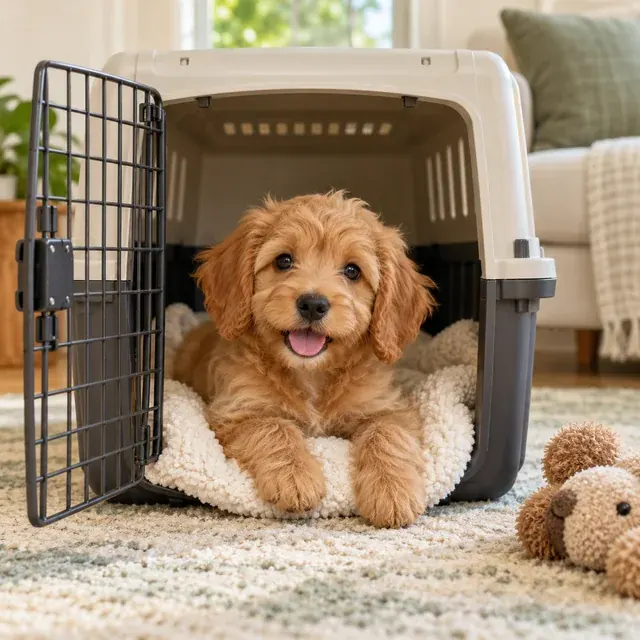

Describes a toilet rule of thumb of at least every three hours at two months, four hours at three months, and so on, alongside short initial crate periods and reward-based training. The specification's months + 1 formula is an approximate planning calculation, not a guaranteed capacity or safe time alone.
Daily care
Puppy Daily Routine by Age
Build a puppy schedule by age with meal times, toilet reminders, short play, training and room for naps.
Puppy day
Enter your puppy's age and your household's wake and bed times.
DAILY ROUTINE
Ready when you arePuppy daily routine
Ready when you are.
Enter your puppy's age and times, then choose Create puppy daily routine to see a plan for one day.
For general information only, not professional advice. Check the official sources below. Use your own judgement and speak to a qualified professional before you act.
Based on official guidance
Calculated on your device
A starting point, not advice
HOW TO USE IT
Start with your details
Enter your puppy's age
Use a whole number from 8 to 52 weeks. Update the age as your puppy grows; a saved routine keeps the age you entered.
Choose wake and bed times
Use your own or your caregiver's usual wake and bed times to plan your puppy's day. A bed time earlier on the clock means the following day, marked Next day. The planner needs room for meals at least two hours apart; this is a scheduling rule, not veterinary guidance.
Create and adapt the routine
Choose Create puppy daily routine to see one day by the hour. Add earlier toilet trips during training, after naps and play, or whenever your puppy signals a need. Let tired puppies rest.
Keep your plan handy
Save on this device, open a copy from Saved, share a link or print. Delete a saved entry or choose Delete saved data in Saved. Shared links contain only the age and times.
HOW IT WORKS
What shapes your result
Approximate age in months = floor(age in weeks / 4.33). The calculated hold limit = approximate months + 1 hours, labelled a common rule of thumb. It is not a guaranteed bladder capacity, a safe time alone or a reason to delay a needed toilet trip.
The calculated hold limit is a common rule of thumb, not a target to wait for. During toilet training, RSPCA recommends trips every 45 to 60 minutes depending on age, plus after waking, meals, play and excitement. Add these earlier trips and respond to your puppy's signals, even during a planned nap. The formula does not tell you how long it is safe to leave your puppy alone or guarantee a dry night.
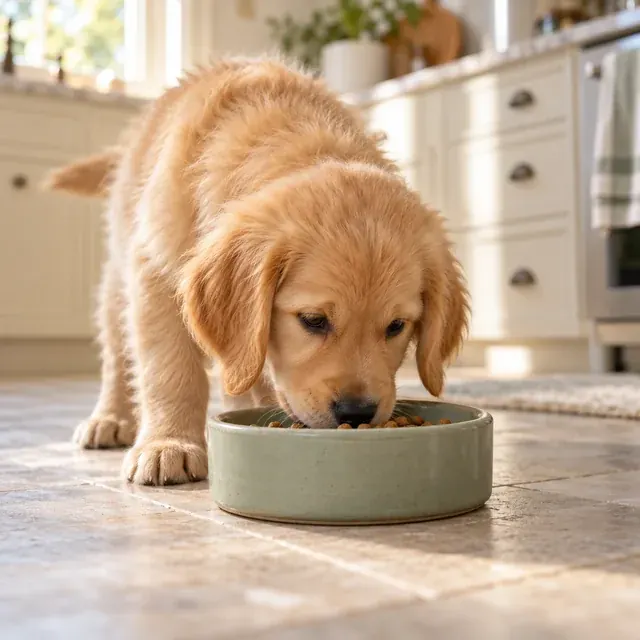
The feeding guide uses four meals below three approximate months, three from three to below six, and two from six to twelve. Meals run from waking to three hours before bed, evenly spaced and rounded to the nearest minute. The planner requires at least two hours between them. Those exact boundaries, clock times and minimum gap are PupCalendar scheduling rules, not veterinary guidance. Follow the food label and individual advice for amounts.
Timed toilet reminders start at waking and repeat at the calculated interval. A final opportunity is added before bed. Each meal is followed by a separate toilet instruction, even when its start time matches a timed break. A clock time marks the start of a sequence; it does not mean the activities happen simultaneously.
Short play and reward-based training follow toilet breaks. Display hours count from your chosen wake time, with exact activity times kept inside each hour. Consecutive gaps are grouped as flexible time for rest, naps or gentle play to suit your puppy. A grouped range does not mean sleeping for the whole period; add earlier toilet trips as needed. Durations stay flexible. The plan stops at bed time and does not schedule overnight toilet trips. Changing a form value clears its URL reference and shows an Inputs changed notice. The previous routine stays visible until you choose Create again.
Read about our methodologyFAQ
Common questions
Short answers to what people ask most.
How much should a puppy sleep?
Make room for undisturbed naps and quiet rest throughout the day. The plan leaves rest between activities but does not set an hourly sleep target. RSPCA advises giving puppies time to rest; adjust the routine to your puppy rather than keeping a tired puppy active.
How often does a puppy need the toilet?
The months + 1 calculation is a common rule of thumb from AVSAB, not the only time to go out. During training, RSPCA recommends opportunities every 45 to 60 minutes depending on age, and after waking, meals, play and excitement. Act sooner whenever your puppy shows a need.
How long should a training session be?
Keep sessions brief, gentle and rewarding, and stop if your puppy is tired or uncomfortable. This routine suggests short practice after toilet breaks without prescribing minutes. AVSAB supports positive reinforcement; the plan's activity sequence is an adjustable suggestion.
What time should a puppy go to bed?
Choose a consistent bed time that fits your household and your puppy. The routine includes a final toilet opportunity and ends at bed time. It does not promise your puppy can sleep through the night or calculate night trips.
How are meal times worked out?
In this feeding guide, puppies below three approximate months get four meals, three to below six get three, and six to twelve get two. Times are spread from waking to three hours before bed and rounded to the nearest minute. These are planning times; use the food label and individual advice for portions and feeding needs.
Can the puppy routine be saved or shared?
Save keeps a separate copy in this browser. Open it through Saved or delete it there. Share puts the age and times in the URL fragment, which is not sent to the host. Anyone with the link can read those settings. Print includes the plan and its source qualifications; no separate calendar download is provided.
Sources and checked dates
Each note explains what its source supports. Open the link to read the guidance yourself.
Supports trips on waking, before bed, after meals, play and excitement, immediate rewards, and opportunities every 45 to 60 minutes during training depending on age. It does not support using the calculated hold interval as the sole toilet-training frequency. The result and print plan show this qualification.
Supports time to rest, a consistent routine, small regular meals and positive, reward-based learning. PupCalendar leaves activity and nap durations flexible rather than inventing numerical targets.
Supports four meals at eight to twelve weeks, three at three to six months, and two at six months to one year. PupCalendar applies the specified under-three and under-six month boundaries. The daily routine converts weeks to approximate months; the feeding planner uses entered months. Adult feeding advice is not used in these puppy plans.
The guidelines assess individual animal, diet and feeding-management factors, including timing and frequency, and recommend individual feeding plans. They are not cited as prescribing this planner's exact clock times.
Supports following food feeding instructions and choosing the amount and diet for age, lifestyle and health needs. The general dog advice is not used as an exact puppy four/three/two-meal age chart.
The table on printed page 8 gives four meals at eight to sixteen weeks, three from sixteen weeks to six months and two from six months, with individual needs varying. Its first transition differs from the specified three-month change used here. This chart uses the three-month transition shown above; this leaflet supports food-pack guidance for daily portions.