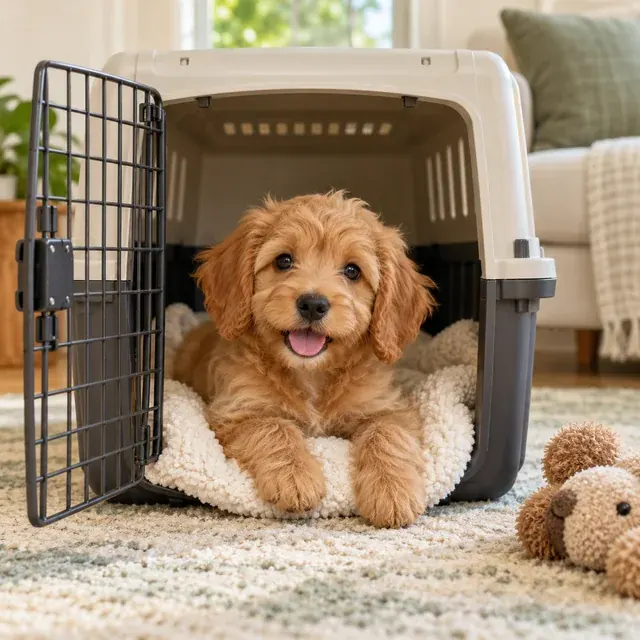

In advice about short crating periods, describes a toilet rule of thumb of at least every three hours at two months, four hours at three months, and so on. This supports months plus one as a planning interval, not a promise that every puppy can wait that long in other settings.
Training & behavior
Puppy Potty Training Schedule
Plan toilet opportunities around your puppy's day and spot gaps that need care while you are away.
Puppy day
Enter your puppy's age and your own daily times.
POTTY PLAN
Ready when you arePuppy potty schedule
Ready when you are.
Enter age and times, then choose Create puppy potty schedule to see toilet breaks and any away-gap warning.
For general information only, not professional advice. Check the official sources below. Use your own judgement and speak to a qualified professional before you act.
Based on official guidance
Calculated on your device
A starting point, not advice
HOW TO USE IT
Start with your details
Enter age and times
Enter your puppy's age in whole months, from 2 to 12, then your own wake time, leaving-home time, return time and bedtime. A time after midnight belongs to the following day.
Create the schedule
The result adds trips on waking, before leaving, on return, while at home and before bed. If the away gap is longer than the calculated interval, it suggests a visit halfway through.
Arrange real care
A suggested visit is not booked for you. Longer gaps and time alone need a person to help; add earlier trips during training and after meals, play, naps or signs your puppy needs to go.
Keep a copy
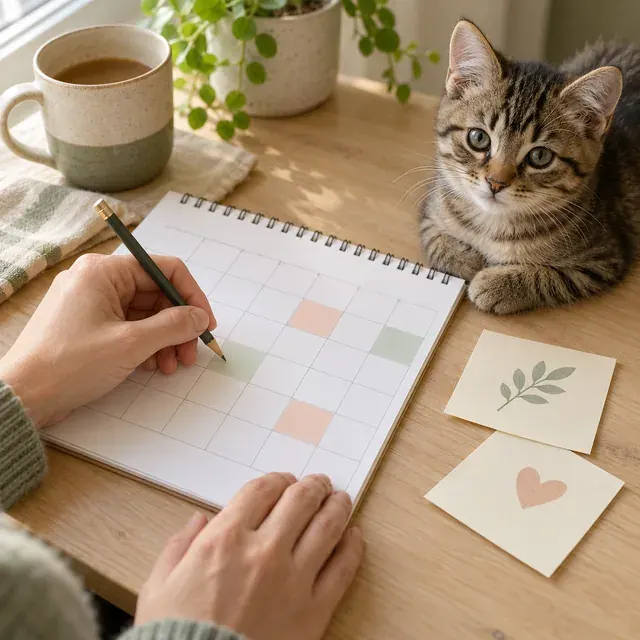
Save a separate copy on this device, share a link, print, or download a 30-day daily calendar. You can reopen or delete saved plans from Saved.
HOW IT WORKS
What shapes your result
The approximate toilet interval in hours is age in whole months + 1. AVSAB describes this as a rule of thumb for short periods in a crate, beginning at two months. It is not a guarantee that a puppy can wait that long in other situations or be left alone that long.
The planner places a trip on waking, before leaving, on returning and before bed. It adds trips every calculated interval during each period at home. When an interval trip falls within 15 minutes before leaving or bed, that earlier trip serves both purposes. A break is suggested halfway through an away gap only when that gap exceeds the interval; arranging it is your responsibility. If one midpoint visit still leaves a gap longer than the interval, the result warns you to arrange more breaks.
RSPCA advises much more frequent toilet opportunities during active training, including about every 45 to 60 minutes depending on age and after waking, meals, play and excitement. It separately advises against leaving dogs alone for more than four hours. AKC advises toilet access after about six hours from six months onward, so the uncapped formula at older ages is not a recommended wait. A single midpoint visit may still leave stretches longer than either guidance allows. The calendar repeats these planning times for 30 days; review and remove them when your routine changes.
Read about our methodologyFAQ
Common questions
Short answers to what people ask most.
How often should you take a puppy out?
The months + 1 hours figure is a planning formula, not a safe waiting target. RSPCA advises opportunities about every 45 to 60 minutes during active training, depending on age, and after waking, meals, play and excitement. For puppies from six months onward, the formula can exceed AKC's roughly six-hour toilet guidance.
Can a puppy wait while you are at work?
The planner highlights any away gap beyond the approximate hold interval and suggests a midpoint visit. RSPCA separately advises not leaving dogs alone longer than four hours. A single visit may not be enough, so arrange care that fits both your puppy and your working day.
How long does potty training take?
There is no fixed finish date in the cited guidance. Keep offering regular opportunities and rewarding your puppy for toileting in the right place. If training is difficult or accidents continue, ask your vet to check for a health concern.
What if your puppy needs to go sooner?
Take your puppy out sooner. Offer trips after meals, naps, play and excitement, and whenever you see signs of needing the toilet. Change the entered times and create the plan again if your day changes.
Do calendar events remind me forever?
No. The download contains daily repeating events for 30 days, starting on the day you download it. It does not send alerts or arrange care. Review or remove the events if your routine changes.
Should you take a puppy out at night?
This workday planner does not calculate overnight trips. Offer a toilet opportunity before bed and when your puppy wakes or shows signs of needing one. Ask your vet if you are unsure what your individual puppy needs overnight.
Sources and checked dates
Each note explains what its source supports. Open the link to read the guidance yourself.
Supports opportunities on waking, before bed, before leaving and on return, after meals and play, and every 45 to 60 minutes during active training depending on age. This is more frequent than the calculated hold interval.
Advises that dogs should be left alone for no longer than four hours, with opportunities for exercise, toileting and company. The specified single midpoint visit in a nine-hour gap leaves two 4.5-hour stretches, so the result warns that additional care is needed.
Its age table lists six hours at six months and a maximum range of six to eight hours above six months. The text says dogs after six months can usually hold urine up to six hours. This limits how the uncapped months-plus-one formula should be interpreted; it does not replace the specified calculation.