Everyday care
Puppy sleep schedule by age: naps and nights
Puppies sleep a lot, but there is no exact number of hours to aim for. PDSA says most dogs need 14 to 16 hours or more a day, with puppies needing the most, while measured studies suggest less. A good puppy sleep schedule offers a nap after each short spell of play, a calm evening and planned night toilet breaks.
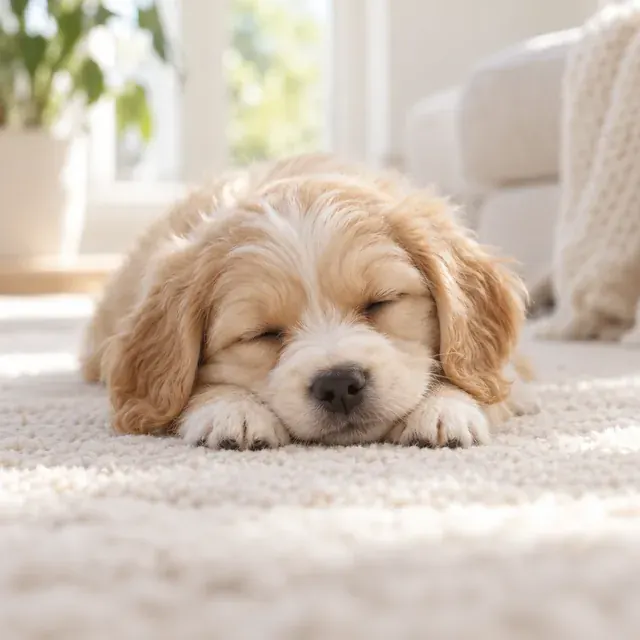
How much sleep does a puppy need?
PDSA says most dogs need 14 to 16 hours or more of sleep in 24 hours, and that puppies are among those that need the most. Popular guides often say 18 to 20 hours for puppies.
Measured data tell a less tidy story. An AAHA magazine article notes that a 2020 study of puppies up to 12 months old recorded closer to 11 hours, and that how well a dog sleeps may matter more than the count. Treat any hours figure as a rough guide, not a target.
Watch how your puppy sleeps instead. Deep, relaxed sleep, often lying flat and stretched out with slow breathing, is a good sign. A puppy that wakes at every footstep may need a quieter spot.
Sources: PDSA: Dogs and sleep, our top tips (opens in a new tab)AAHA Trends magazine: How sleep shapes canine behavior (opens in a new tab)
Puppy sleep schedule by age
The table uses PupCalendar's planners for a puppy that wakes at 07:00 and goes to bed at 22:00. Day naps come from the Puppy Daily Routine: after each toilet break, a little play and training, then a nap or quiet rest. Night breaks come from the Crate Training Plan, which uses age in months plus one hour.
Give earlier breaks whenever your puppy needs them. For puppies under six months, Humane World for Animals advises no more than 3 to 4 hours at a time in a crate. It also suggests keeping the crate in or near your bedroom at first, so you hear a puppy that needs to go out.
| Age | Toilet interval used | Naps offered in the day | Night toilet breaks |
|---|---|---|---|
| 8 weeks | 2 hours | 8 | 00:00, 02:00, 04:00, 06:00 |
| 12 weeks | 3 hours | 7 | 01:00, 04:00 |
| 16 weeks | 4 hours | 5 | 02:00, 06:00 |
| 26 weeks | 7 hours | 4 | 05:00 |
Sources: Humane World for Animals: Crate training your dog or puppy (opens in a new tab)
What does a puppy nap schedule look like?
Enter your puppy's age, wake time and bed time in the Puppy Daily Routine. For a 12-week-old puppy awake from 07:00 to 22:00, the planner gives a toilet interval of 3 hours, four meals and seven points in the day where it suggests a nap or quiet rest.
Worked example
Age 12 weeks; wake 07:00; bed 22:00
- Toilet interval
- 3 hours
- Meal times
- 07:00, 11:00, 15:00, 19:00
- Nap or rest offered after
- 07:00, 10:00, 11:00, 13:00, 15:00, 16:00, 19:00
Checked against the Puppy Daily Routine. Nap lengths are up to your puppy.
Each nap follows a toilet break, short play and brief training. Take your puppy out again when they wake. RSPCA advice is to let puppies rest regularly and keep training sessions short.
How do I build a puppy sleep routine?
A steady routine helps more than any exact bedtime. These steps come from vet and welfare guidance.
- Active play earlier
An AAHA magazine article suggests walks and lively play earlier in the day, then calmer things such as chews as the evening comes. Hard play just before bed can wind a puppy up.
- A quiet place
RSPCA advises a comfortable bed or crate in a quiet spot where your puppy can rest undisturbed.
- The same steps each night
Keep a short, calm wind-down before bed, the same each evening, and finish with a toilet break.
- Stay close at first
Given a choice, most puppies sleep close to people, the AAHA article reports. A bed or crate near you can help a new puppy settle.
Sources: AAHA Trends magazine: How sleep shapes canine behavior (opens in a new tab)RSPCA: Caring for your puppy (opens in a new tab)
Why is my puppy wild in the evening?
Many puppies nip, bite and get restless in the evening. The AAHA article suggests this is often a tired puppy, much like an overtired toddler, rather than a problem with temperament.
Try an earlier nap, a chew or a sniffing game, and a quiet room. PDSA also links short sleep in dogs, under 10 hours a day, with more growling, snapping and biting. If evening behavior worries you, or your puppy cannot settle at all, talk to your vet.
Sources: PDSA: Dogs and sleep, our top tips (opens in a new tab)AAHA Trends magazine: How sleep shapes canine behavior (opens in a new tab)
Try it with your own details
Use the Puppy daily routine to build your own result.
For general information only, not professional advice. Check the official sources below. Use your own judgement and speak to a qualified professional before you act.
Common questions
More answers on this topic.
How many hours should a puppy sleep?
There is no exact figure. PDSA says most dogs need 14 to 16 hours or more a day and puppies need the most; measured studies suggest less. Watch for calm, deep sleep rather than counting hours.
What is a good puppy nap schedule?
Offer a nap or quiet rest after each toilet break, short play and brief training. The Puppy Daily Routine places these through the day for your puppy's age.
When can a puppy sleep through the night?
It varies. The planners use age in months plus one hour as a rough guide for night breaks, so the gaps grow as your puppy gets older. Keep offering breaks while your puppy still needs them.
What time should a puppy go to bed?
Choose a time that suits your home and keep it steady. A calm wind-down and a last toilet break matter more than the exact time.
Should a puppy sleep in a crate?
A crate can work if your puppy is happy in it. Introduce it slowly, keep it near you at first and stay within the time limits for your puppy's age.
Sources and checked dates
Each note explains what its source supports. Open the link to read the guidance yourself.
Published 11 October 2024. Most dogs need 14 to 16 hours or more of sleep in 24 hours, with puppies among those needing the most. PDSA's PAW Report links less than ten hours of sleep a day with more growling, snapping or biting. Advises a quiet, comfortable place to rest.
Published 17 July 2026; Trends content is not an official AAHA position. Popular guidance says 18 to 20 hours for puppies, but measured data, including a 2020 study of puppies up to 12 months, suggest closer to 11 hours. Sleep quality and being easily disturbed matter. Suggests active play earlier in the day, calm activities in the evening, a steady wind-down, and notes that most puppies given a choice sleep close to people. Links evening nipping and biting with tiredness.
Advises a bed or crate in a quiet place where the puppy can rest undisturbed, regular rest, short training sessions and a consistent routine. Gives no hours of sleep.
Puppies under 6 months should not stay in a crate for more than three or four hours at a time. The FAQ gives age in months plus one hour as a limit. Suggests starting with the crate in or near the bedroom so you can hear a puppy that needs to go out.